Scientific background, clinical validity, and significance for brain health.

Lifestyle plays a demonstrable role in brain health and the risk of cognitive decline
The LIBRA lifestyle test is a scientifically validated questionnaire, developed by Maastricht University
Research such as the FINGER study shows that lifestyle interventions can delay and prevent cognitive decline
By repeating over time, LIBRA helps to better track changes in risk and brain health
Increasing research shows that dementia and cognitive decline are not determined solely by age or heredity. Lifestyle and health also play a crucial role.
A major international analysis, published in The Lancet, indicates that about 40 percent of dementia cases are linked to factors that can, in principle, be influenced. Consider exercise, blood pressure, hearing, smoking, depression, and social contacts.
These insights form the basis for a preventative approach to brain health. Not by addressing one factor, but by considering the whole picture.
LIBRA stands for Lifestyle for Brain Health. It is a questionnaire that brings together various lifestyle and health factors into one overview.
The questions cover topics such as:
exercise
nutrition
mental and social activities
cardiovascular health
mood and stress
sleep and general health
Each factor is selected based on scientific research that has found a link with cognitive decline or dementia. The outcome is not a diagnosis, but rather a picture of risk factors and protective factors.
The LIBRA methodology was developed by researchers at Maastricht University. In recent publications, the questionnaire has been further developed into LIBRA2, where the underlying factors have been reassessed based on current scientific knowledge.
LIBRA is used as a tool to:
make lifestyle-related risks visible
support prevention
track changes over time
It is not a medical diagnostic instrument, but a scientifically substantiated way to gain insight into factors that are related to brain health.

The LIBRA method was developed at Maastricht University.
The approach behind LIBRA aligns with the FINGER study. This large international study examined whether a combination of lifestyle interventions affects cognitive decline.
The results showed that participants who received guidance on multiple lifestyle domains, such as nutrition, exercise, cognitive training, and cardiovascular health, exhibited less decline than the control group.
In the Netherlands, the FINGER-NL study is underway, in which this approach is further examined within the Dutch healthcare context.
These studies demonstrate that lifestyle matters and that it is meaningful to systematically monitor risks and changes.

Daily lifestyle choices contribute to long-term brain health.
The LIBRA test provides a snapshot. However, lifestyle and health change over time.
By filling out the questionnaire again, it becomes visible:
what remains the same
where improvement occurs
where extra attention might be needed
It is precisely this comparison over time that makes the test valuable for monitoring brain health.
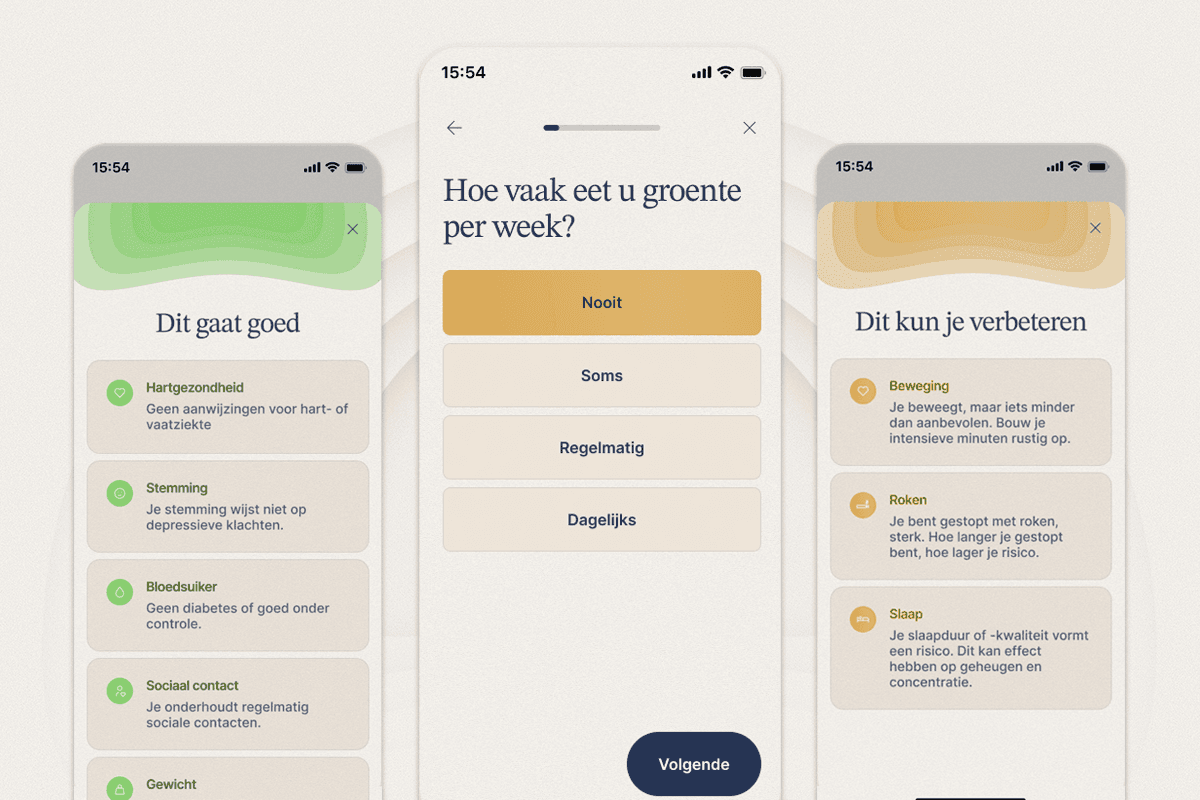
Example of the LIBRA lifestyle test in the Remind app
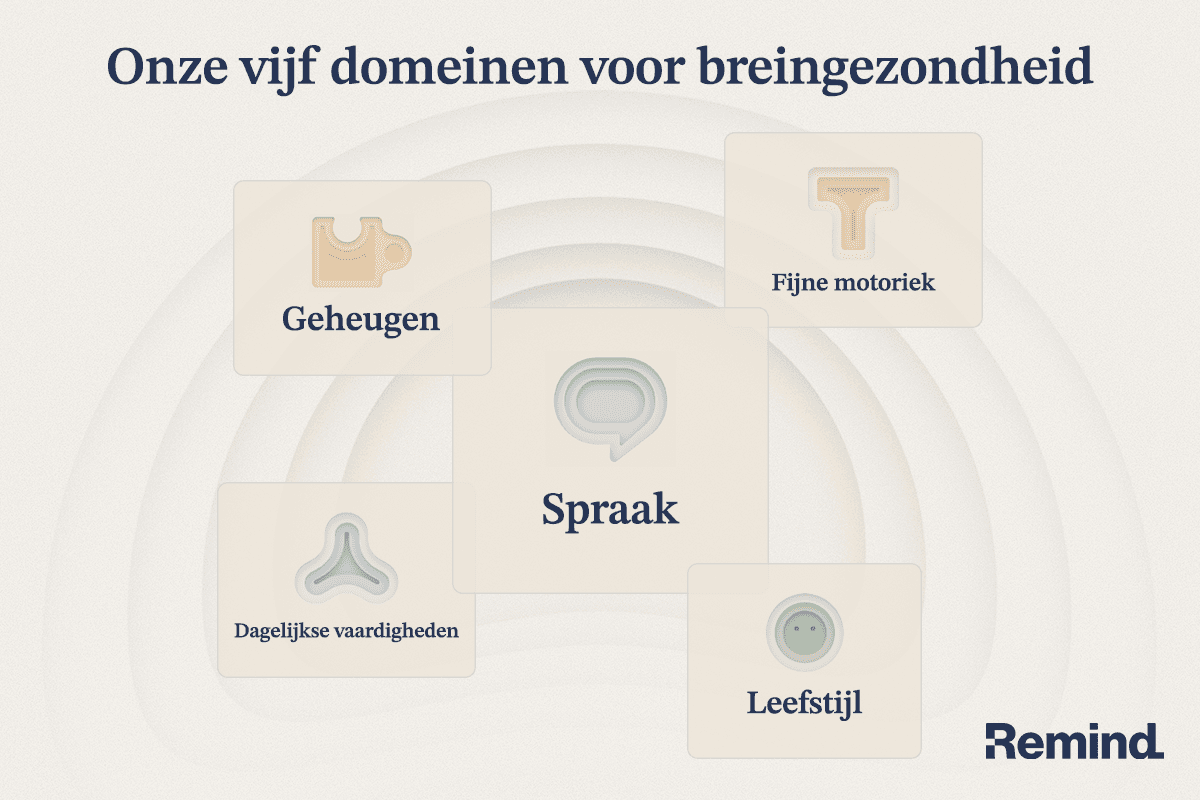
Remind combines multiple domains to better understand changes in brain health.
Within Remind, the LIBRA lifestyle test is not used on its own. Brain health is complex and is rarely captured in a single measurement. By combining different types of signals, a more reliable and complete picture emerges.
That’s why Remind works with a multi-modal approach, in which lifestyle, cognitive tests, and digital biomarkers are reviewed together. The LIBRA test offers context and insight into modifiable risk factors, while other measurements help to track changes in cognitive functioning over time. By combining this information, it is possible to better interpret signals and place individual outcomes in perspective.
The LIBRA lifestyle test is based on years of international research and aligns with current insights into dementia prevention and brain health. It is not a prediction or a diagnosis, but a tool to make lifestyle-related risks and changes visible.
In combination with other measurements, the test contributes to a better understanding of brain health over time.
Share this article


Are you interested in the other assessments we offer at Remind? Read more here:


Frequently Asked Questions
How does Remind help me to recognize changes in my brain in a timely manner?
Is Remind the same as a medical examination or diagnosis?
How reliable are the tests used by Remind?
What happens to my data? Is someone listening or reading along?
What does my Remind Brain Age mean for me?