The effect of cognitive activities on brain health.

Your brain isn't a muscle, but it works according to a similar principle: what you use, stays stronger. People who continue to actively use their brain throughout their lives generally have a lower risk of rapid cognitive decline. Even when changes occur in the brain, they often continue to function well in daily life for longer.
That is why cognitive activity is included in the LIBRA score as a protective factor for brain health.
Staying cognitively active means regularly challenging your brain. It doesn’t have to be complicated. It involves activities that require you to think, remember, plan, or learn something new, such as:
reading, writing, or following a newspaper
puzzles and games
learning new skills or hobbies
making music, singing, or learning an instrument
work or volunteer activities that involve organizing and decision-making
The key is that the brain is actively engaged. Passive consumption, like watching TV for hours, hardly counts.

Building Cognitive Reserve
By continuing to engage your brain for extended periods, you build a reserve. This reserve helps to compensate for changes or damage in the brain for a longer time, delaying the onset of noticeable symptoms.
Strengthening of Brain Networks
Learning new information and using existing skills strengthens the connections between brain cells. This makes the brain more flexible and more resistant to decline.
Connection with Other Healthy Habits
People who are cognitively active often have more social contacts and remain physically active. These factors complement each other and together contribute to brain health.
“Doing puzzles is enough”
Puzzles can help, but variety is important. Reading, learning, and social interaction stimulate the brain in different ways.
“Training your brain only helps when you're young”
Even at an older age, the brain responds to challenges. Learning new things continues to have an effect, regardless of your age.
“It has to be difficult to be meaningful”
It doesn't have to be extremely challenging. Too much frustration actually works against you. A light challenge that interests you works best.
“I'm not smart enough for new things”
Cognitive activity is not about being smart, but about staying curious and continuing to use your brain.
Plan daily brain time
Aim for about half an hour to an hour each day where you consciously do something that challenges your brain.
Choose something you enjoy
Motivation is important. Activities that give joy are easier to maintain.
Vary the type of activity
Alternate between language, memory, logical thinking, and creativity. This stimulates different parts of the brain.
Combine with social contact
Learning or playing together enhances the effect. Consider a book club, game night, or course.
Keep trying new things
New skills demand more from your brain than familiar routines. This makes them especially valuable.
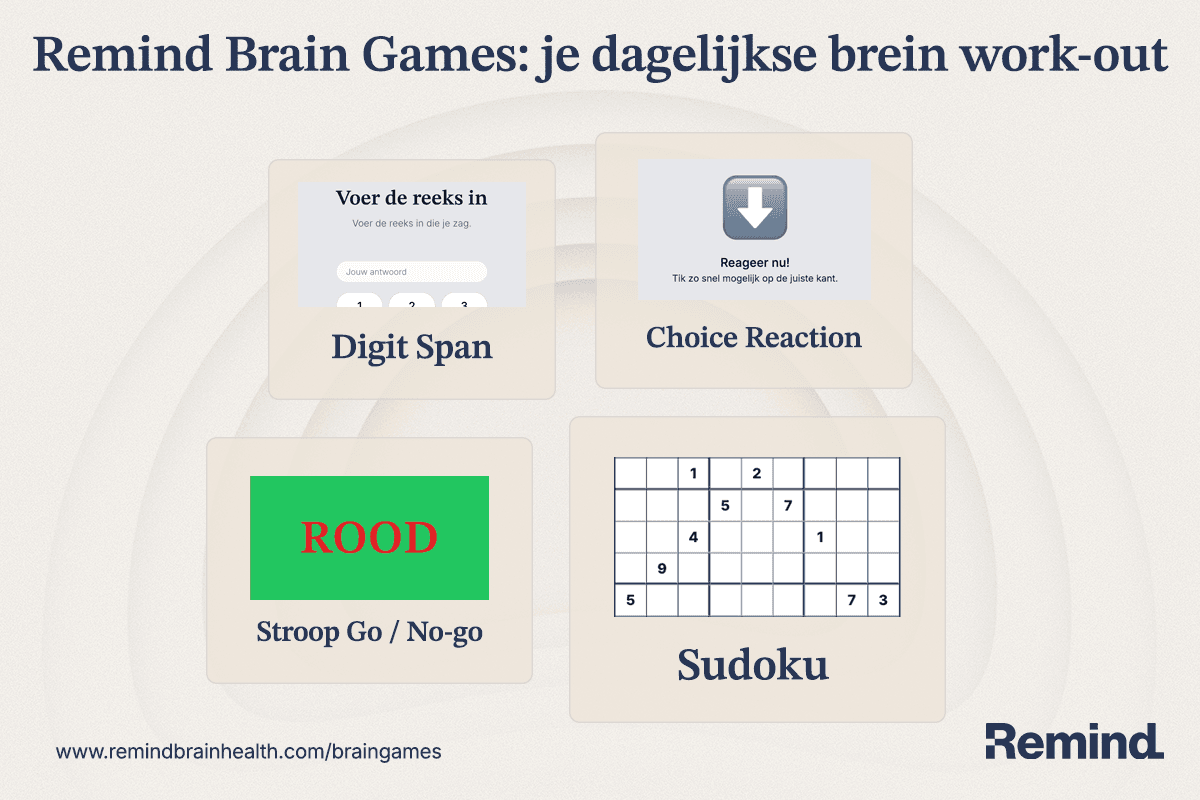
We have developed a selection of Brain Games designed to train different cognitive functions. These are exclusively available for Remind+ users. Play them daily here!
If cognitive activities become increasingly difficult or cause frustration, it may be a signal to discuss this with your doctor. Especially if there are memory complaints or other changes.
At Remind, we've gathered the 15 most important modifiable factors for you. You can view each one individually and read about ways to manage them:


Share this article


Frequently Asked Questions
How does Remind help me to recognize changes in my brain in a timely manner?
Is Remind the same as a medical examination or diagnosis?
How reliable are the tests used by Remind?
What happens to my data? Is someone listening or reading along?
What does my Remind Brain Age mean for me?