The effects of a healthy diet on your brain health.



You probably already know that nutrition is important for your heart, your weight, or your blood sugar. But your diet is also one of the most powerful levers you can pull for your brain.
Your brain is extremely energy-intensive: about 20 percent of your daily energy consumption goes to that one and a half kilos of tissue in your skull. What you eat not only determines the amount of fuel available but also the quality of your blood vessels, your level of inflammation, and even your gut flora.
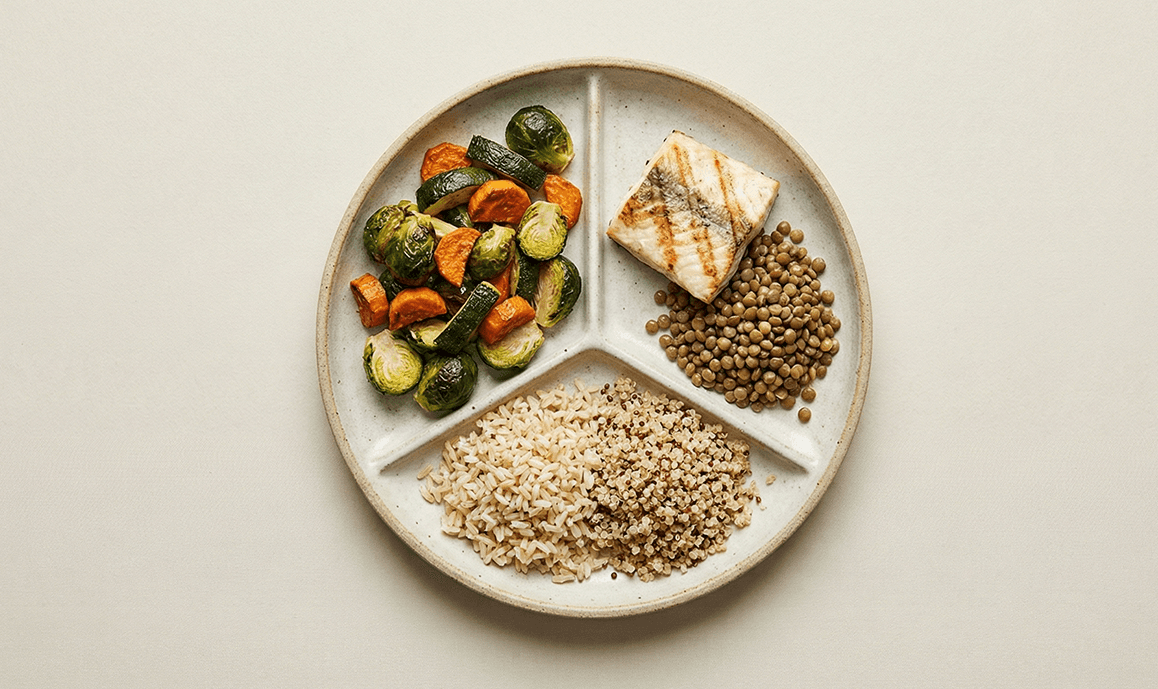
For the LIBRA score, it's not about superfoods or complex diets, but the overall pattern over years:
Mostly plant-based: vegetables, fruits (especially berries), whole grains, nuts, seeds, and legumes
Healthy fats: mainly from olive oil, nuts, and fatty fish
Low in ultra-processed foods: limited soft drinks, cookies, chips, ready-made meals, and cold cuts
Limited red and processed meat
People who follow this pattern for a long time often show slower decline in memory and cognitive abilities in research. Imaging studies also often find larger brain volumes in areas important for memory and planning.
You probably already know that nutrition is important for your heart, weight, or blood sugar. But your diet is also one of the most powerful levers you have for your brain.
Your brain is extremely energy-intensive: about 20 percent of your daily energy consumption goes to that one and a half kilograms of tissue in your skull. What you eat not only determines how much fuel is available but also the quality of your blood vessels, your level of inflammation, and even your gut flora.
Large cohort studies show that a Mediterranean-like diet is associated with a lower risk of cognitive decline and dementia. Estimates range from about 10 to 30 percent risk reduction. Some studies even describe a delay in cognitive aging by several years.
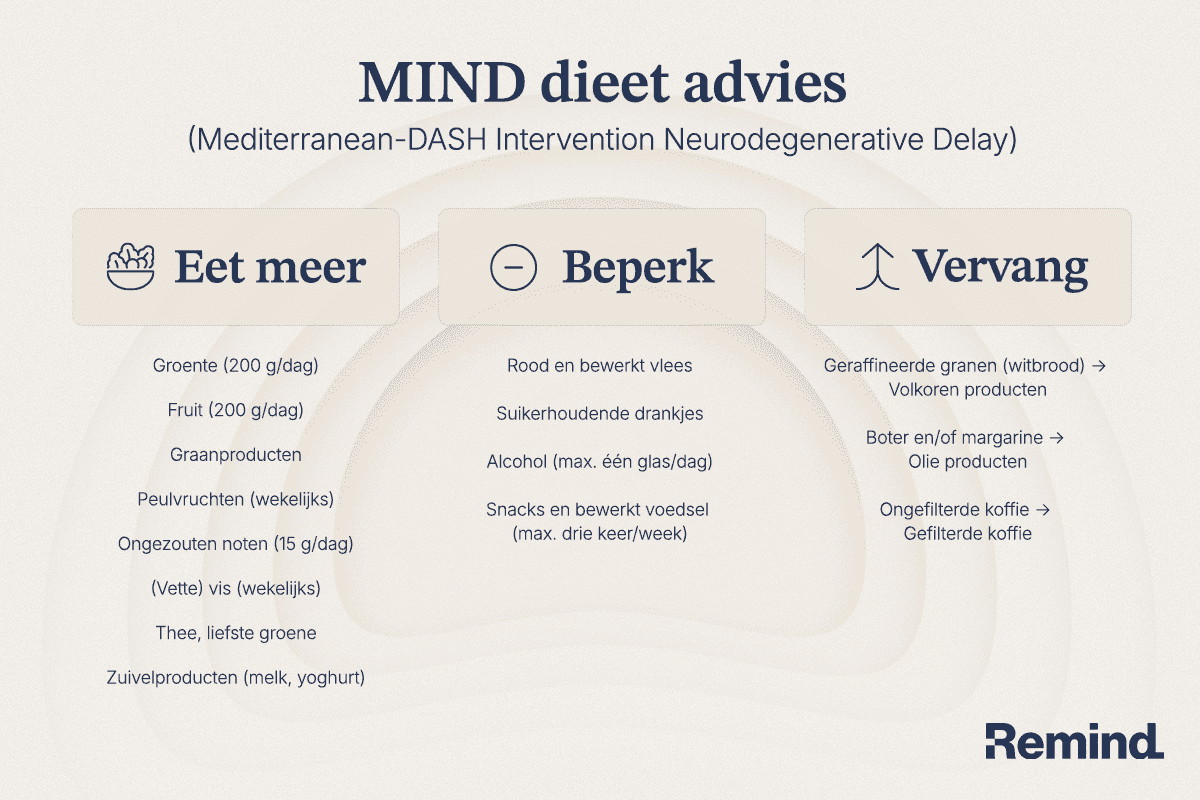
The MIND diet also shows similar effects. This is a nutritional pattern specially developed with a focus on brain health.
MIND stands for Mediterranean–DASH Intervention for Neurodegenerative Delay. It combines elements from two well-known healthy eating patterns:
The Mediterranean diet, with plenty of vegetables, fish, olive oil, and legumes
The DASH diet (Dietary Approaches to Stop Hypertension), originally developed to lower high blood pressure
The MIND diet places extra emphasis on food that is beneficial for the brain, such as leafy green vegetables, berries, nuts, and fish, and recommends limiting processed foods, sugar, and red meat.
At the same time, we see globally that unhealthy eating is precisely contributing significantly to dementia risk. Think of too much salt, too few vegetables and fruits, a lot of red and processed meat, and a high intake of highly processed foods.
Nutrition affects your brain through multiple, mutually reinforcing pathways.
1. Blood Vessels
The same diet that is good for your heart also protects the small blood vessels in your brain. Less atherosclerosis and better vascular function mean fewer silent infarctions and less damage to white matter, processes that are strongly associated with later cognitive decline.
2. Inflammation and Oxidative Stress
Chronic low-grade inflammation is increasingly seen as an important driver of brain aging and dementia. A diet rich in vegetables, fruits, olive oil, and plant-based substances has anti-inflammatory effects and reduces damage from oxidative stress.
3. Sugar Metabolism and Insulin Resistance
High fast carbohydrates and highly processed foods increase the risk of insulin resistance. Brain cells need insulin to function properly. Disruption of this system is linked to Alzheimer-like processes and is sometimes even called “type 3 diabetes.”
4. Gut-Brain Axis
High-fiber foods and fermented products such as yogurt, kefir, and sauerkraut nourish beneficial gut bacteria. Through the immune system and inflammation pathways, they also influence the brain. A healthier gut flora is associated with better cognitive function and lower inflammation levels.
Important to know: Unhealthy nutrition rarely works in isolation. It enhances other risk factors such as obesity, diabetes, high blood pressure, and high cholesterol. Therefore, nutrition is regarded as a key lever in almost all prevention models.
“A multivitamin compensates for a poor diet.”
The primary benefits for the brain come from complete dietary patterns, not from individual pills. Supplements can sometimes be valuable, but they don't replace a full diet.
“Carbohydrates are bad for your brain.”
The issue isn't carbohydrates themselves, but the degree of processing. Whole grains are actually beneficial for vascular and brain health. Sugar-rich and highly processed products are unfavorable.
“Red meat is necessary for strength and concentration.”
Red meat provides protein and iron, but high consumption is associated with more vascular disease and possibly a higher risk of dementia. One serving per week or less is sufficient for most people.
“A glass of wine a day is good for the brain.” Recent studies indicate that there is likely no truly safe level of alcohol for brain health. Drinking less or stopping is the safest choice.
You don't need a perfect diet. Every small improvement is a gain, even at a later age.
1. Start with vegetables and fruits
Guideline: 250 to 300 grams of vegetables per day, plus 1 to 2 servings of fruit
Practical:
Half a plate of vegetables at dinner
Vegetable soup or salad at lunch
Raw vegetables ready in the fridge as a snack
2. Smartly swap your fats
Use olive oil instead of butter
Unsalted nuts instead of cookies
Fatty fish twice a week, or more often legumes
3. Less processed, more real food
The shorter the ingredient list, the better
Limit soft drinks, energy drinks, ready meals, and deli meats
4. Stabilize your blood sugar
Choose whole grains instead of white
Always combine carbohydrates with protein and fat
Avoid large sugar spikes
5. Make it achievable, not heroic
Choose one meal to improve
Address one regular snack time
Work with a few consistent, simple healthy dishes
If you have diabetes, severe cardiovascular disease, kidney problems, or unintentional weight loss, always discuss significant dietary changes with your doctor or dietitian. Healthy eating should never disrupt the balance of other health issues.
At Remind, we've gathered the 15 most important modifiable factors for you. You can view each one individually and read about ways to manage them:


Frequently Asked Questions