The Neurokeys keyboard and fine motor skills
How typing patterns provide insight into brain health, with attention to privacy and scientific support
Summary of this article
- Fine motor skills and typing patterns provide subtle signals of cognitive functioning
- The Neurokeys keyboard measures how someone types, not what someone types
- The technology is based on scientific research from academic centers
- Typing behavior can reveal changes over time
- Privacy and data security are central to the design
- Within Remind, Neurokeys is an additional signal domain within the personal brain profile
Clinical relevance of fine motor skills and typing patterns
Research shows that changes in fine motor skills:
- can occur early in cognitive decline
- are associated with conditions like Alzheimer’s and Parkinson’s
- often progress subtly and gradually
Typing patterns therefore form a valuable digital biomarker. They capture signals that naturally arise in daily interaction with technology, without extra burden for the user.
Scientific studies show that this type of measurement is particularly suitable for monitoring and tracking changes over time.
What is the Neurokeys keyboard?
The Neurokeys keyboard is a special software keyboard that provides insight into fine motor skills and typing behavior. It is used on the smartphone and replaces the standard keyboard.
During regular typing, certain characteristics are measured, such as:
- typing speed
- timing between keystrokes
- variation in rhythm
- stability of motor movements
These patterns indicate something about the coordination between motor skills, attention, and cognitive processing.
Importantly, the keyboard does not analyze content. It is solely concerned with how someone types, not what someone types.
How Neurokeys technically works
Neurokeys works in the background while someone uses their phone normally. There is no need for a separate test or task.
Technically, the following occur:
- anonymous timing data is recorded
- patterns are analyzed over a long period
- changes are monitored compared to one’s own baseline
The strength lies in the longitudinal nature. Not one measurement is decisive, but the development of patterns over time.
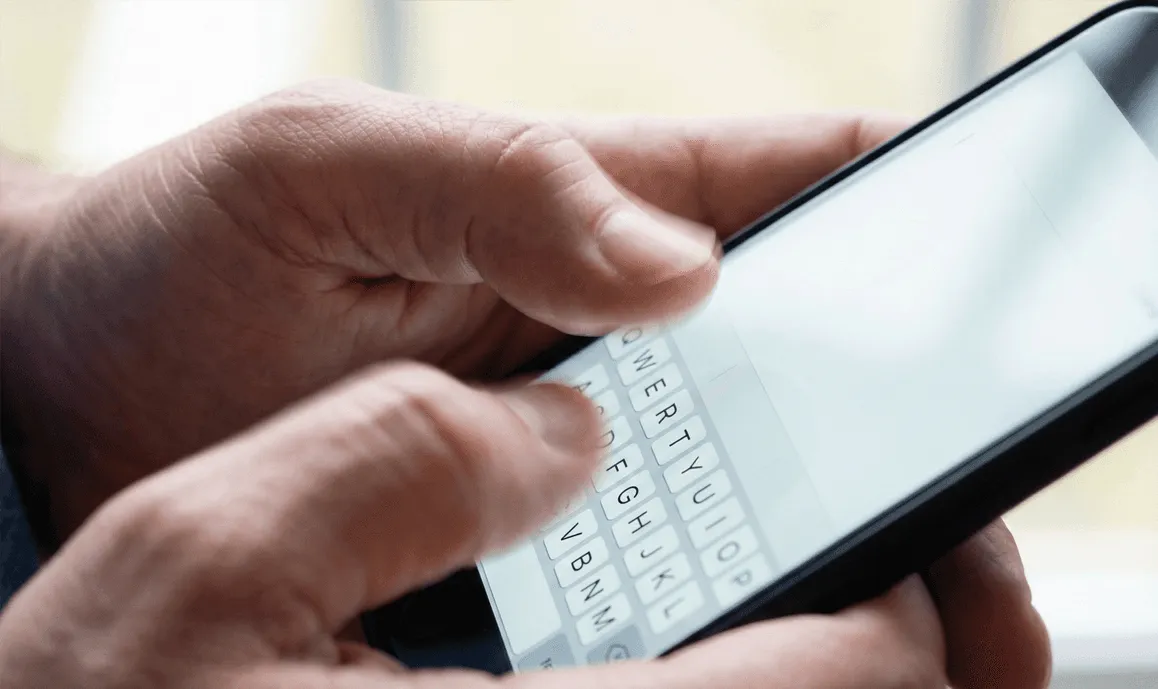
How does the Neurokeys model work and what does that mean?
The Neurokeys keyboard works with a trained algorithmic model that recognizes patterns in how someone types. Such a model does not learn via fixed rules but by analyzing examples. During the development phase, it was trained with large amounts of typing data, linked to research and clinical contexts, to learn which variations in rhythm, timing, and consistency are meaningful.
Importantly, Neurokeys does not look at what you type, but solely at how you type. Content, words, and sentences are not analyzed or stored. The model operates entirely on timing and rhythm.
This type of technology is currently mainly applied within research and clinical environments, for example, in clinical trials where long-term and consistent monitoring is essential.
Remind makes this scientifically studied method easily accessible for the first time in an application that can be used directly by consumers. By measuring passively and repeatedly, it provides insight into changes over time, matching how cognitive and motor changes develop in practice: gradually and subtly.
What is and isn’t measured
What is measured:
- speed and rhythm of typing
- variation in keystrokes
- stability of motor patterns
What is not measured:
- content of messages
- words, sentences, or language use
- contacts, conversations, or apps
The technology is specifically designed to protect privacy and only use functional signals.
Privacy and data security
Privacy is an essential part of Neurokeys.
Therefore, the following applies:
- no storage of text or content
- data is processed anonymously
- only aggregated patterns are used
- data is securely stored according to applicable standards
Users always maintain control over usage and can disable the keyboard at any time.
The role of Neurokeys within Remind
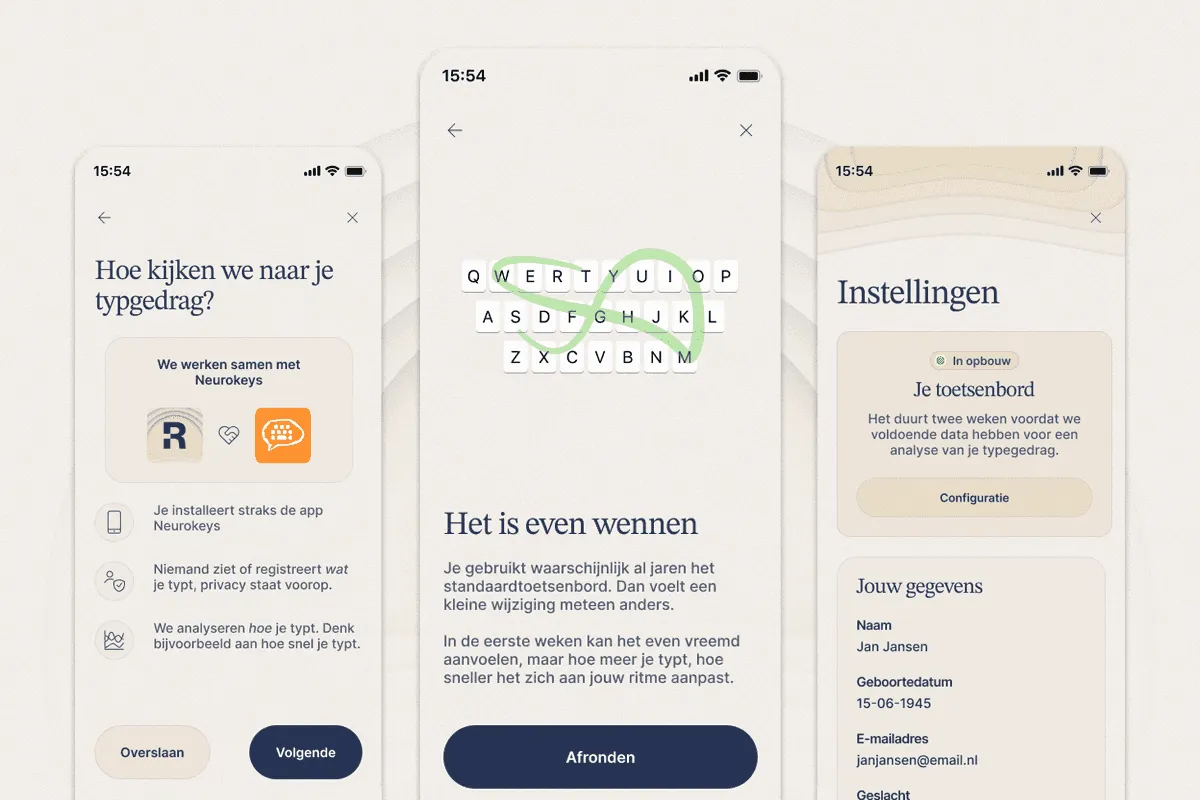
Within Remind, Neurokeys is one of the signal domains within the personal brain profile.
The role is threefold:
1. Passive monitoring Neurokeys collects signals without active tests or questions.
2. Complement to other measurements The insights are combined with memory tests, speech, daily skills, and lifestyle.
3. Tracking changes over time Through long-term observation, patterns become visible that are not seen with isolated measurements.
The results are always placed in context within Remind and never presented as standalone judgments.
Multiple measurements together provide more insight
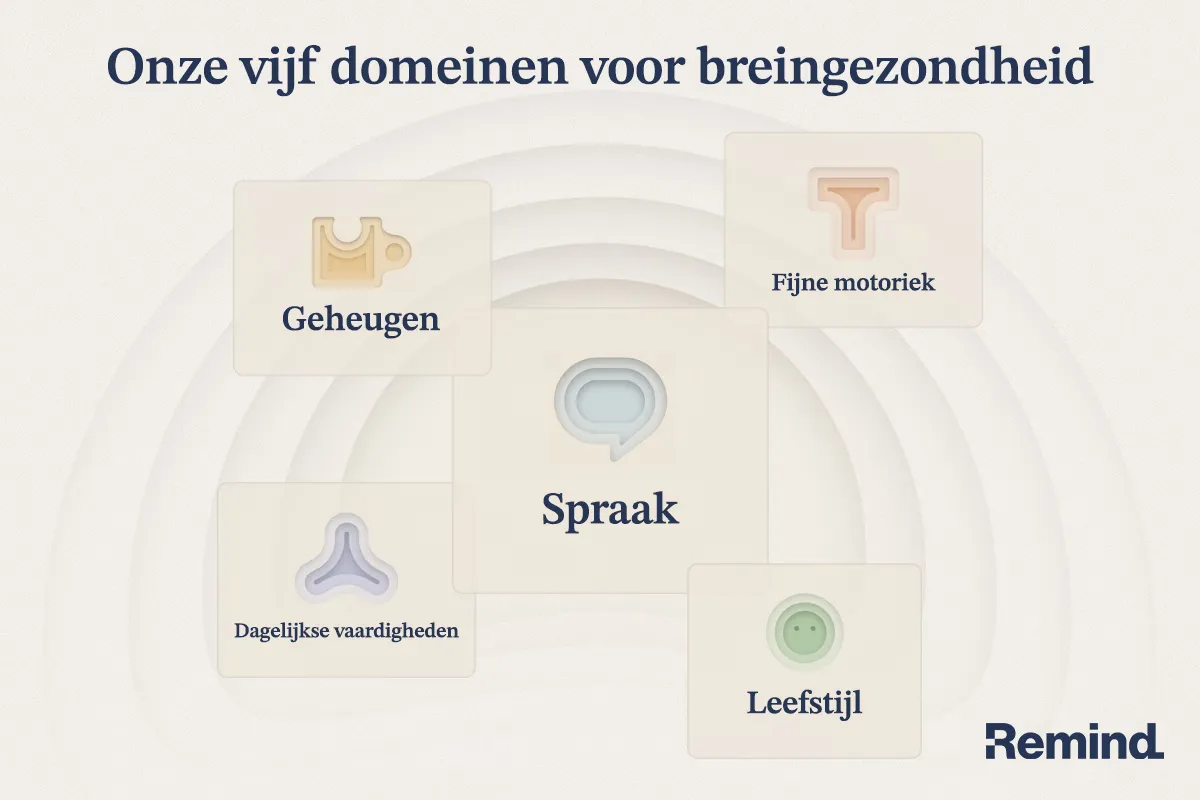
Remind operates from a multi-modal approach. Cognitive change cannot be captured in a single test or signal.
By combining:
- fine motor skills via Neurokeys
- memory and cognitive tasks
- speech analysis
- daily skills
- lifestyle and behavior
a more complete and reliable picture of brain health emerges. Each domain reinforces the interpretation of the others.
In conclusion
The Neurokeys keyboard uses everyday smartphone usage to make subtle signals about brain health visible.
Without additional tests, with respect for privacy, and always in combination with other measurements, it contributes to a better understanding of cognitive change over time.
Read more
Interested in the other measurements Remind offers? Read on here:
-

Lifestyle
A growing body of research shows that dementia and cognitive decline are not determined by age or heredity alone. Lifestyle and health also play an important role.
Read more -
Speech
Speech seems self-evident, but it is neurologically complex. While speaking, multiple brain areas work together, among them those for language processing, planning, memory and motor skills.
Read more -

Memory
Memory is a core function of the brain. It allows us to take in new information, hold on to it and recall it later.
Read more -

Daily skills
Daily skills give important signals about cognitive functioning. The A-IADL is a scientifically validated questionnaire that measures these skills.
Read more
Frequently asked questions
How does Remind help me recognise changes in my brain in time?
Remind monitors multiple aspects of your brain health over time, such as thinking, memory, speech and daily functioning. By combining these signals you get a clear picture of what is normal for you and which changes deserve attention. This provides peace of mind and prevents you from reacting too late to subtle shifts.
Is Remind the same as a medical examination or diagnosis?
No. Remind is a wellbeing product and not a medical device. The app provides insight into patterns and changes but does not replace a doctor or a diagnosis. If you have concerns about your memory or functioning, always discuss your results with your GP.
How reliable are the measurement methods Remind uses?
Remind uses methods based on validated questionnaires and digital tests that are also applied in research and clinical settings. We combine multiple sources, such as speech, memory, behaviour and lifestyle, so that you do not get a single snapshot but a complete and reliable picture that grows as you use the app.
What happens to my data? Is anyone listening or reading along?
No. Remind never stores conversations or the content of messages. All data is processed with encryption, and we only use patterns such as pace, rhythm or accuracy, not content. You always decide which data you share and with whom.
What does my Remind brain age give me?
Your Remind brain age shows how your brain is functioning compared with what is normal for your age. You receive practical advice to strengthen your brain health and can see over time whether your actions have an effect. This helps you make informed choices and stay in control.